Module 3. The Welles Era: Noise, Recognition & Reckoning
Course 1: Singing the News. Understanding Jesse Welles and the Wellespring Project
Estimated Time: 20–25 minutes
🧭 Module Objectives
- Explain how Jesse Wells/Welles moved from DIY projects to a major-label record deal.
- Describe the themes, sound, and critical reception of Red Trees and White Trashes (2018).
- Assess how industry pressures shaped his later decision to retreat and reinvent himself.
Arrival in Nashville
By 2016, after years of self-produced releases and garage-band tours, Jesse Wells headed to Nashville in search of wider horizons. He signed with 300 Entertainment (label for Mary J. Blige, Young Thug, Tee Grizzley, and other mostly hip-hop artists), joined forces with seasoned studio players, and adopted a streamlined stage name: Welles. He saw the new identity as a reset—a return to his roots but with a modern edge.
I think we've settled with this name now... I'm Jesse Wells and I write songs for this Welles project. And this Welles project is a rock and roll endeavor. (Houston Press interview, 2018)
The move brought resources and visibility he'd never had before, but also expectations, deadlines, and creative compromise.
Red Trees and White Trashes (2018)
Released in June 2018 and produced in part by Grammy-winner Dave Cobb, the album was a high-voltage collision of classic rock and grunge. Songs like "Codeine," "Life Like Mine," and "Seventeen" melded psychedelic swagger with heartland storytelling.
Here's the official studio-produced music video for the Welles song "Seventeen":
An NPR review noted that the album "has the heft and complexity to likely earn a few Grammy nominations" and that Wells himself, though only 23 years old at the time, "is already writing hooks that any of his heroes would envy" (NPR review, 2018). Nylon called it "matter-of-fact rock that fits nicely alongside early Bob Dylan and The Flaming Lips" (Nylon interview, 2017).
Here's a 2019 remix (specifically made for listening with 3D headphones) of the Welles song "Into Ashes":
Behind the scenes, though, the process was disorienting. Welles entered the studio to find session musicians he'd never met.
I really wasn’t incredibly involved in that part... they hired studio musicians that I'd never met before. (Pancakes & Whiskey interview, 2018)
The result was professionally impressive but personally alienating—music he loved but did not fully recognize as his own.
Touring and Recognition
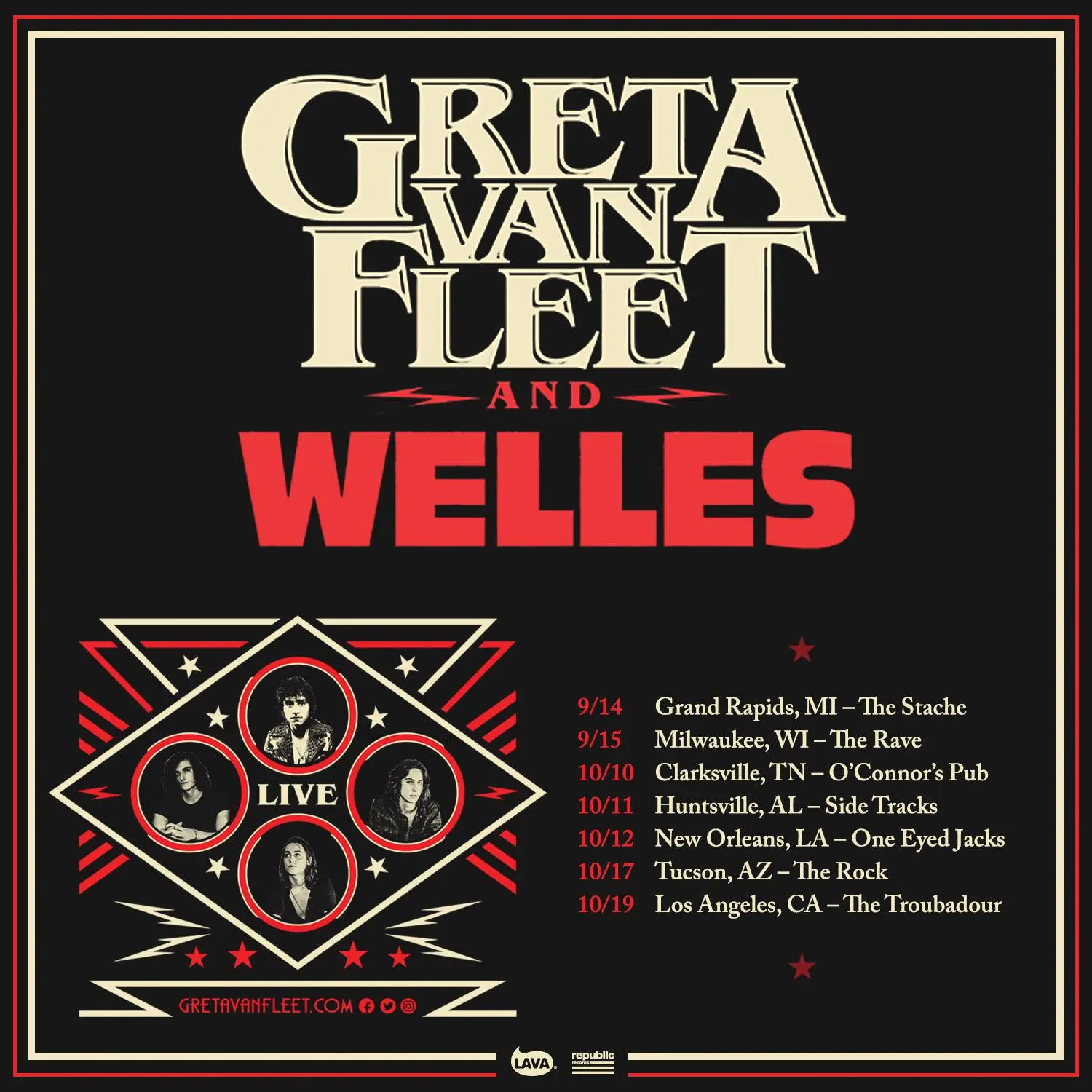
From 2017 through 2019, Welles toured relentlessly: more than 280 shows across North America and Europe, opening for Greta Van Fleet, Royal Blood, and Dead Sara. He earned a reputation for raw stage energy: feedback-drenched guitars, gravelly vocals, and wry self-deprecation. Fans saw a throwback to 70s rock in spirit and sound.
Here's a short video from the 2019 Welles tour:
Yet beneath the noise, he was exhausted. The major-label machine was demanding a persona he could no longer sustain. Dropped mid-pandemic by his label, he took a job at a vegan meat manufacturer and considered quitting music entirely. (Farm Aid, Against the Grain Podcast, 2025)
Themes and Contradictions
The album's lyrics reveal a young artist wrestling with identity and class:
- "Seventeen" — nostalgia and rebellion against small-town limitations.
- "Rock N Roll" — a manifesto defending the genre's spirit against commercial decay.
- "Life Like Mine" — bitterness tempered with humor and humanity.
He framed his Arkansas roots with equal parts pride and irony:
If you're going to be listening to it, you're going to be stepping through my life... through red trees and white trashes. (Pancakes & Whiskey interview, 2018)
The title summed up his project: rock as memoir, as autobiography, as portrait of a place and class rarely heard in mainstream music.
Reckoning with the Industry
Welles' honesty extended to his view of rock itself. In interviews he dismissed the idea that rock was dead:
Rock and roll is by no means dead, it's nowhere close... I've heard more good rock and roll in the past five years than in my entire life. (Houston Press interview, 2018)
Still, the gap between industry expectation and personal truth grew wider. He wanted to release songs as he wrote them—"day after day"—while marketing teams wanted months-long rollouts. (Nylon interview, 2017)
The disillusionment set the stage for his next transformation: from amplified rocker to lone folk storyteller.
From Noise to Silence
By 2020, the pandemic brought touring to a halt. Welles went home to Arkansas, read voraciously, ran marathons, and thought he was done with music. Then his father's heart attack in 2024 re-ignited the fire: a renewed sense that art was not optional but urgent.
This moment of crisis became the pivot point for everything to come—and the origin of his viral folk awakening.
Where We're Headed
Next, in Module 4: Silence to Song: Reinvention and the Rise of 'Singing the News', we trace how that hiatus turned into a rebirth. From Arkansas woods to viral feeds, Jesse Welles re-emerges as one of America's most unexpected folk voices.
Knowledge Check & Reflection
Sources & Further Reading
A LOT of material about Jesse Welles, his history, and creative work is available online. We can't provide a comprehensive list of these sources, but the following are quoted in or specifically referenced in this module, or are otherwise directly relevant to the "Welles" era:
- Against the Grain Podcast. "Episode 1: Folk Singers and Politics (Artists and Activism Series)." Farm Aid, July 30, 2025.
- Gray, Karyn. "20 Minutes With Jesse Wells of Rock Outfit Welles." ION Magazine, August 7, 2018.
- Guitar.com. "Interview: Jesse Wells, the Man behind Welles." Guitar.com, November 26, 2018.
- Isenhart, Olivia. "What Fans of Welles Should Know: 'You Don't Have to Worry.'"Pancakes and Whiskey, July 27, 2018.
- Manders, Hayden. "Meet Welles, The Band That Tells It Like It Is." Nylon, June 7, 2017.
- Pepper Rodgers, Jeffrey. "Meet Jesse Welles, Fiery Folksinger on the Rise." Acoustic Guitar, August 20, 2025.
- Powers, Ann. "On His Debut Album, Welles Pretties Up Dirty Rock And Roll." NPR Music, June 7, 2018.
- Sendejas, Jr., Jesse. "Jesse Wells Says Reports of Rock's Death Are Greatly Exaggerated." Music. Houston Press (Houston, TX), September 6, 2018.